


Doug Donaldson,
Founder
PlaySportsTV
Welcome to PlaySportsTV!
Take a look around and discover why over 7,500 coaches rely on our 200+ basketball training videos and practice plans to teach and coach youth basketball. Our exclusive online training process (featuring professional coaches and players) will get you prepared for practice and give you the confidence you need to be a great coach… guaranteed!
See all 4 Basketball Courses you get with your subscription!
Basketball Drills and Tips
-
Basketball Dribbling: Basics
-
Basketball Dribbling: Beyond Basics
-
Basketball Passing: Basics
-
Basketball Passing: Beyond Basics
-
Basketball Rebounding
-
Basketball Shooting: Basics
-
Basketball Shooting: Beyond Basics
-
Basketball Offense: Point Guard Drills
-
Basketball Defense
-
Girls' Basketball
-
Strength and Conditioning
-
Basketball Rules: The Court
-
Basketball Rules: On Offense
-
 Start-Stop Double Dribble
-
 Two-Hand Double Dribble
-
 Palming Violation
-
 Pivot Foot Violation
-
 Backcourt Pass Violation
-
 Backcourt Violation
-
 Throw-in Violation
-
 Five-Second Rule on Throw-ins
-
 Inbounds Pass Violation
-
 Five-Second Violation
-
 Three-Second Violation
-
 The Foul Lane
-
 Offensive Foul Shot Violation
-
 Swinging Elbows Violation
-
 Charging Foul
-
 Illegal Screen
-
 Time-Out Hand Signals
-
 Official's Hand Signals
-
-
Basketball Rules: On Defense
-
Basketball Coach's Corner
 Warm-up Dribbling Drill
 Triple Threat to Ball Handling, Part 1
 Triple Threat to Ball Handling, Part 2
 Ball Handling
 Stationary Dribbling Drill
 Finger Pads for Dribbling
 Dribbling and Pivoting
 Protecting the Ball Drill
 Moving With the Basketball
 Keep Away Drill
 Two-Ball Dribbling Drills
 Dribbling Efficiency Drill
 Five Dribbling Maneuvers
 Between-the-Legs Dribble
 Behind-the-Back Dribble
 Crossover Dribbling
 Cross Dribbling
 Two-Ball Crossover Drill
 Passing Basics
 Chest Pass Basics
 Chest Pass Drill
 Bounce Pass
 Bounce and Chest Pass Drill
 Passing on the Move
 Overhead Pass
 Wall-Passing Drill
 Bounce and Chest Passes on the Move
 Passing Lane Drill
 Two-Ball Passing Lane Drill
 Pass Around the Defender
 Overhead Throw-In
 Boxing Out
 Rebound and Outlet Pass
 Rebounding Drill
 Foul Shot Rebounding
 Triple Threat to Shot
 Shooting Basics
 Breaking Down the Shot
 Release and Follow-Through
 The Non-Shooting Hand
 Basic Shooting Drill
 Dribble to Layup Transition
 Right-Handed Layup
 Left-Handed Layup
 Two-Ball Layup Drill
 Shooting Contest
 Catch and Shoot
 Mikan Layup Drill
 Jump Stop
 Shot Fake
 Low Post Shots
 How to Shoot Free Throws
 How to Shoot a Jump Hook
 Intro
Intro
 2 Steps Layups Drill
 Toss Out Layups Drill
 Attack The Quick Help
 Finishing Moves in the Paint
 Wrist Rockers
 2 Step Change of Directions
 Cone Line Attacks
 Retreat to Re-attack
 2 Ball Scoring
 Consequence Shooting
 Quick Shots
 Diamond Cones
 Shots From Separation
 Side Pick and Roll Shooting
 Defensive Stance
 Footwork
 Defensive Slide
 One-Pass Away Defense
 Defending the Ball Handler
 Defending the Post
 Defending the Cutter
 V-Cut
V-Cut
 Trapping
 Team Defense
 Swim Manuever
 Rebounding Drill
 Pick & Roll
 Outside Shooting
 Offensive Positioning
 Fouls Defined
 Five Spot Shooting
 Elbow Jumpers
 Decision Making
 Boxing Out
 Beating the Trap
 Back Door Cut
 Pre-Hab Workout
 Warm-Up Drills
 Warm-Up Jump Drill
 Dynamic Flexibility
 Core Drills
 Plyometrics Drill
 Lower Body Strength Drills
 Agility and Reaction Drill
 Quickness and Reaction Drills
 Cool Down Drills
 Baseline Introduction
 Midcourt Line and Sidelines
 Breaking Down the Halfcourt
 Hand Contact Fouls
 Block/Charge Call
 Blocking Foul
 Pushing Foul
 Pushing Back Foul
 Off-the-Ball Foul
 Fouling the Screener
 Foul Shooter Violation
 Defensive Foul Shot Violation
 Defensive Throw-in Violation
 Player Talk
 Practice Philosophy
 Parent Talk
Check out all of the great training videos you get with your subscription!
-
Coaching Youth Basketball:
Ages 8-11 Over 50 Videos!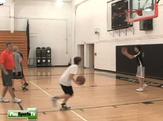
-
Coaching Youth Basketball:
Ages 12 & Up Over 50 Videos!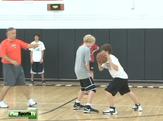
-
Youth Basketball Practice Plans: Ages 9 to 12
-
Speed, Agility and Quickness Training for Kids Over 20 Videos!
Speed, Agility and Quickness Training for Kids
Over 20 Videos!A superb resource for coaches and parents that want to get their athletes into great shape and give them a competitive edge.
- Great for Coaches, Parents, and Volunteers
- Downloadable training notes & tips
 f
f
© 2007-2026 ChalkTalk Media, Inc.
All Rights Reserved.
Partner of USA TODAY High School Sports