


PlaySportsTV Hockey

Subscribe Now!

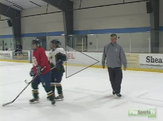
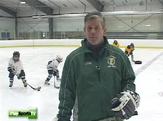
Legendary Michigan Coach Red Berenson Talks Hockey

Michigan ice hockey coach Gordon Berenson.

Michigan ice hockey coach Gordon Berenson.

Bookmark and Share

Gain tips and advice for youth hockey players

By Chris Lindsley
PlaySportsTV Contributor
 
University of Michigan ice hockey coach Gordon "Red" Berenson is one of the most successful college hockey coaches of all time.
 
In his first 24 seasons directing the Wolverines, Berenson's teams won two national titles, appeared in 10 Frozen Fours - hockey's Final Four - and appeared in the NCAA Tournament 18 straight years, the longest such streak in Division I history.
 
Berenson also played for 17 seasons in the National Hockey League. He also scored 20 or more goals in seven seasons.
 
The long-time Michigan coach shares his tips and advice to youth hockey players, their parents and coaches:  
 
PlaySportsTV: What advice do you have for kids interested in ice hockey?
 
Berenson: I think they need to get skating at the youngest age possible. Even as young as 3, they can be on skates in the living room or on ice. They can be on rollerblades even, but the sooner the better. Skating is so important. Then, as soon as they can start playing, whether it’s shinny (an informal type of hockey played on ice in which there are no formal rules or specific positions, and generally, no goaltenders), inside or outside, on or off the ice, it’s important just to get a feel for the game. And then watching hockey can also motivate a lot of kids to be hockey players.
 
PSTV: What do you think about the fact that more girls are now playing ice hockey than ever before? 
 
Berenson: I think the girls love ice hockey just like the boys do. Once they play the game, they love the finesse part of it - the skating, the speed and the teamwork. It’s a great sport for girls. So it is nice that they are getting the opportunity to play. 
 
PSTV: What can youth hockey players learn from watching a college or NHL game? 
 
Berenson: They can learn about playing for a team. They see that everyone is helping. You learn that everyone doesn’t have to be a star, but everyone can help the team win. You can learn about not giving up, and you can learn about the rewards of playing well and working hard together. You can learn about discipline -- it goes on and on. It’s amazing the number of things that you can learn from just watching a team play.
 
PSTV: What should hockey parents keep in mind to best support their kids and coaches and to avoid being a bad sports parent? 
 
Berenson: I think the hardest thing with parents is that they end up second-guessing their own son or daughter, or they end up second-guessing the coaches. I really think they have to take a parental viewpoint of this and support their kids to work hard, have fun and listen to the coaches. When they start critiquing the other players and coaches, really they are just hurting their own kids. So parents can either be a big problem or a big asset. 
 
PSTV: What advice do you have for youth hockey coaches? 
 
Berenson: I think youth hockey coaches need to do their own work to be organized and prepared. They need to take advantage of their ice time and practice time, and they need to generate drills and practices that are fun and competitive but also instructional. 
 
Also, they can watch other teams and other coaches and learn from them. Even coaches in the NHL, they always admit that they are stealing drills or stealing systems from other teams. I think we are all trying to get better. I think if you are a young minor league coach with less experience, you need to work at becoming a better coach yourself so that you can help the kids. 
 
PSTV: What kind of hockey skills can kids work on off the ice to improve their games? 
 
Berenson: They can do shinny or roller hockey. They can practice puck handling and their shot. They can work on their conditioning, their quickness and strength. A lot more is happening off the ice now than ever before. So their endurance can be improved. If you are a really good athlete, it’s a lot easier to play hockey than if you are not a good athlete. And becoming a good athlete is more off the ice than it is on the ice. 
 
PSTV: How important is speed in ice hockey? 
 
Berenson: Speed is very important in hockey, especially if you are a forward. But even if you are a defenseman, speed is crucial. Learning how to skate properly and getting skating tips and instruction can definitely help. Then when you are older, working on your lower body strength, your leg strength, and doing agility drills on and off the ice can always help. You always have to push yourself to another limit. You don’t know how fast you can skate. You have to keep working at it, getting stronger, and you’ll get quicker as well. 
 
PSTV: In what ways can playing hockey help kids both on and off the ice? 
 
Berenson: I think it’s a package deal. It starts with using the sport of hockey, but it makes you a better person. You become a more responsible, a more dedicated, and a more accountable athlete with discipline and a great work ethic. You can become someone we can count on, and someone that uses all the attributes that you learned in hockey for the rest of your life. That’s the biggest reward to me, is seeing these kids turn out to be not only great hockey players, but exceptional people.
 
###
 
Photo courtesy the University of Michigan.


Popular Videos in Hockey

Hockey Posters